The Gulf War has already ceased to be a conventional military confrontation. Today, the struggle for control of the world's transport and energy corridors begins — a struggle that will determine the new balance of power in Eurasia.

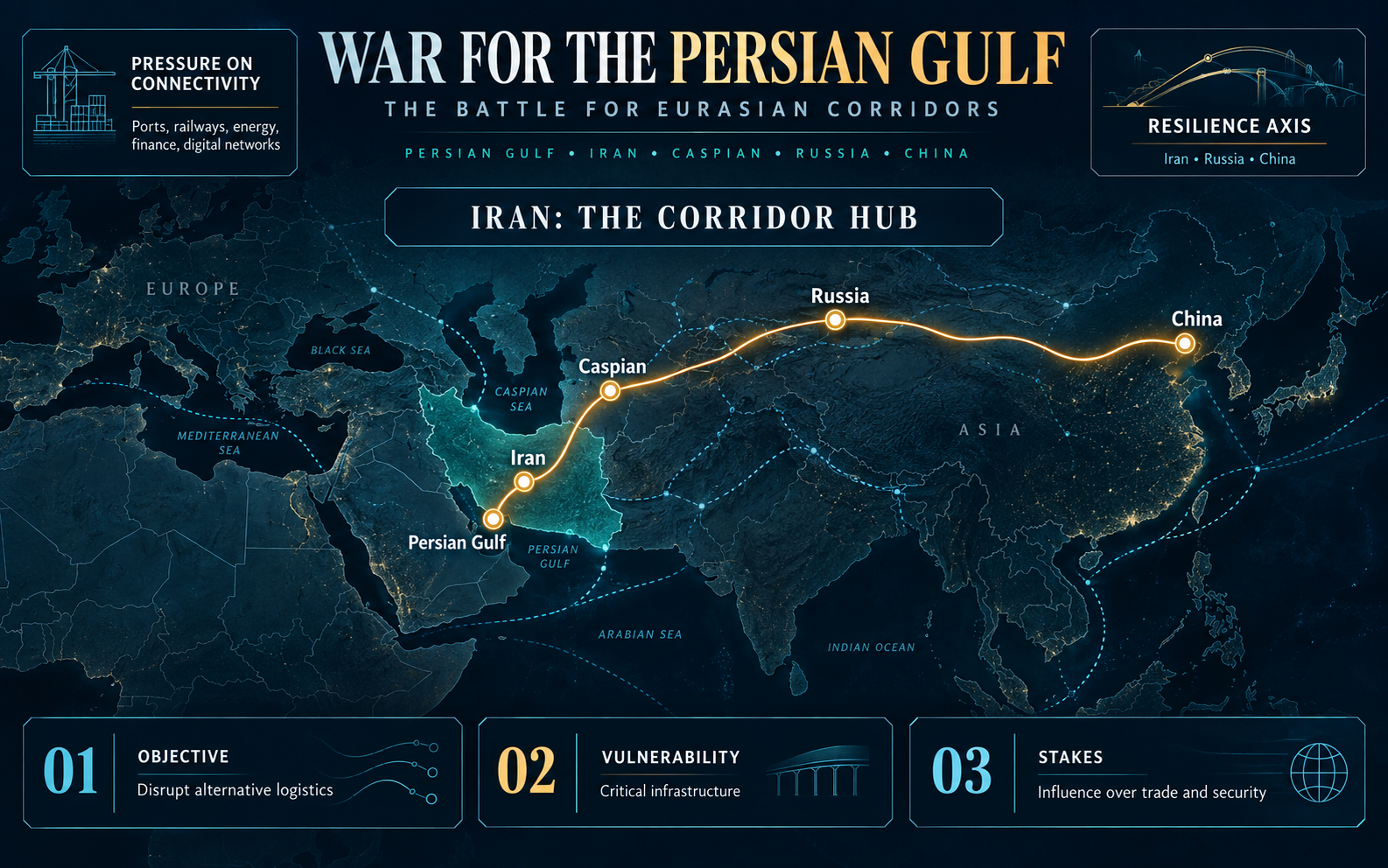
The main purpose of pressure is no longer only to inflict military damage on Iran. The task is much larger — to gradually weaken the geo-economic axis Iran — Russia — Chinaby severing the land and sea routes linking East and West.
Iran today is a key geostrategic node of Eurasia. The most important transport routes connecting the Persian Gulf, the Caspian region, Russia, China, Central Asia, the Caucasus and Europe pass through its territory. The loss of this node means the disruption of the entire architecture of alternative world logistics.
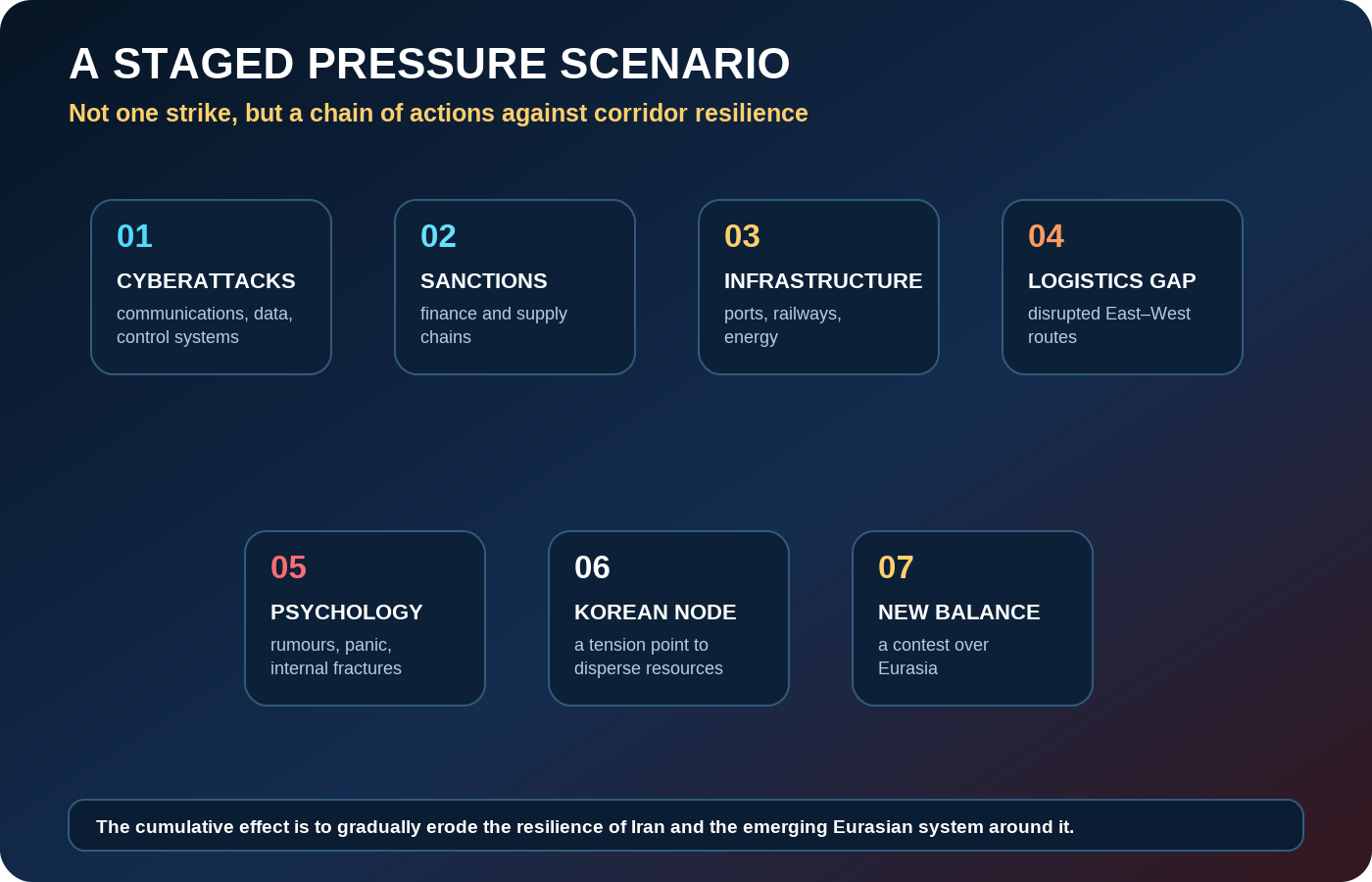
That is why the modern pressure strategy is increasingly built not around large-scale ground operations, but around attacks on ports, railways, energy infrastructure, pipelines, power lines, financial settlement systems and digital communications. In parallel, information and psychological operations, internal loosening of the situation, sanctions pressure and sabotage methods are used.
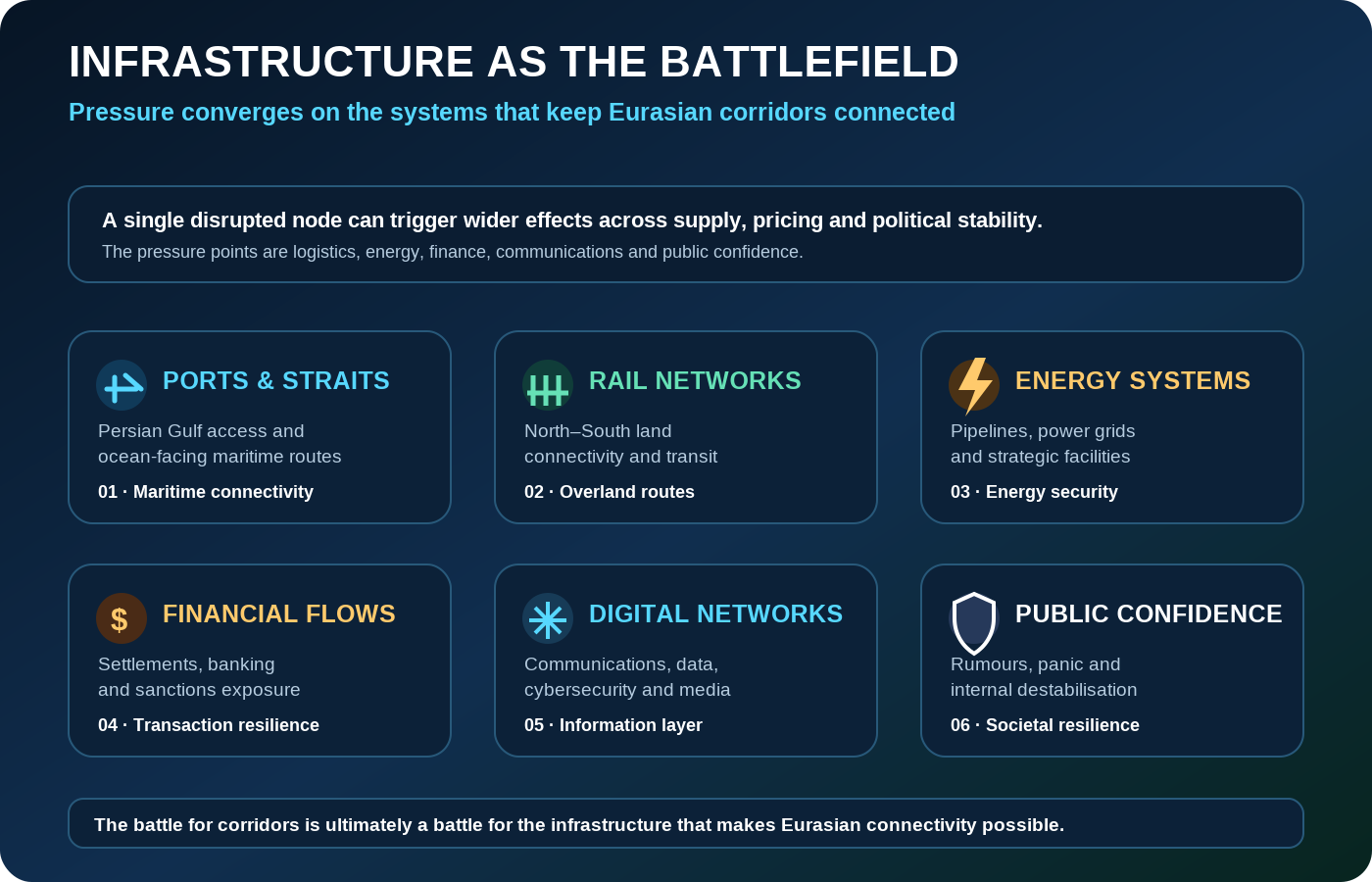
Russia is seen as the northern pillar of the Eurasian transport routes, and China as the main economic center, dependent on the sustainability of international supply chains. Therefore, pressure on Iran simultaneously becomes pressure on the entire emerging Eurasian system.
This strategy also pays special attention to other sensitive regions, including the Korean Peninsula, which can be used as an additional hotbed of tension to disperse the resources of the countries of the East.
In these circumstances, coordination between Iran, Russia and China — from the exchange of intelligence information and joint protection of critical infrastructure to the development of alternative transport routes, financial mechanisms and technological cooperation.
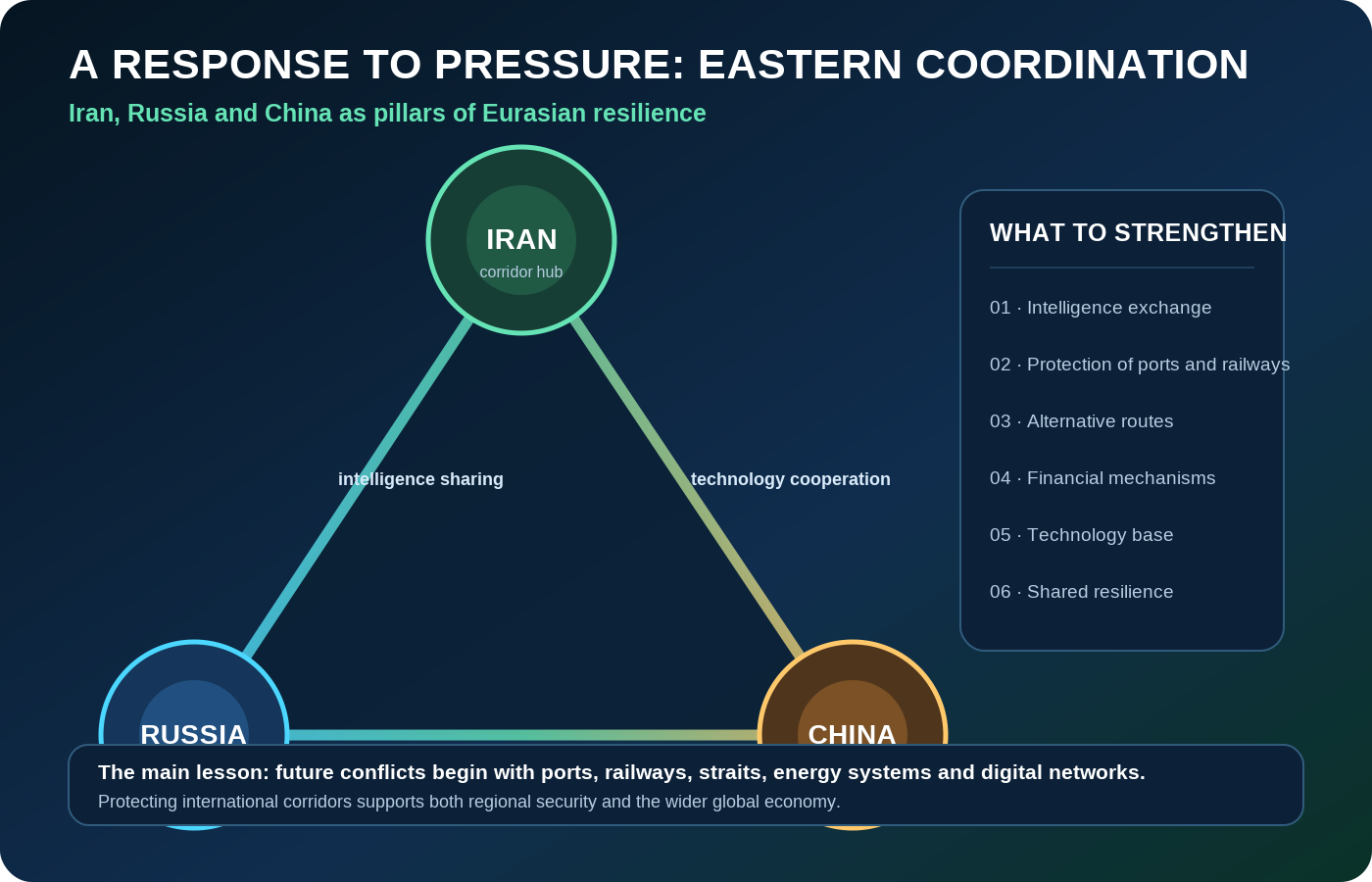
Whoever establishes control over international corridors will have the opportunity to influence not only regional security, but also the global economy.
In the 21st century, the main battlefield is no longer the borders of states, but the routes along which energy, goods, technology and capital move. This is where the outcome of the new geopolitical confrontation will be decided.