The current confrontation around Iran can no longer be seen as a set of separate military strikes, sanctions, information campaigns or regional crises. We are talking about a comprehensive model of pressure, the ultimate goal of which is to weaken the national power of Iran, undermine its territorial integrity and deprive the country of the opportunity to maintain the status of an independent regional power.

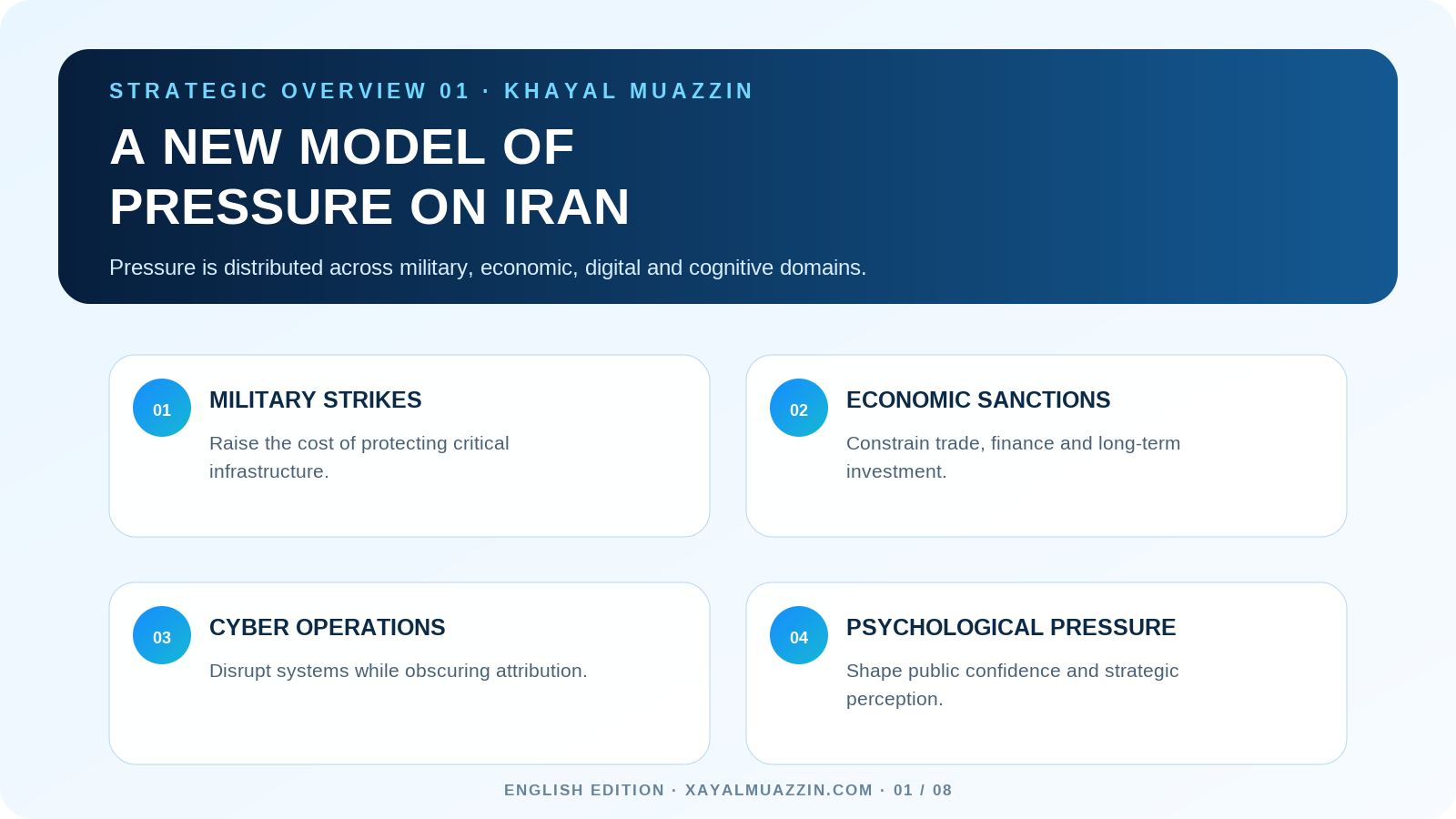
The form of war has changed, but its basic logic has remained the same. Instead of direct confrontation, dependent governments, foreign military bases, proxy forces, separatist and extremist groups, economic sanctions, psychological pressure, information campaigns, intelligence and cyber operations are increasingly used. These tools do not exist separately from each other. They form a single chain of crises,designed to simultaneously link Iran's forces in several directions.
A chain of crises instead of one war
Classical warfare typically has a visible front, a clear line of contact, and measurable military objectives. The new pressure model works differently. It doesn't necessarily start with a large-scale invasion. First, the environment is formed, then the sanctions pressure increases, then information and psychological operations are activated, and in parallel, tension points are created in the border and internal zones.
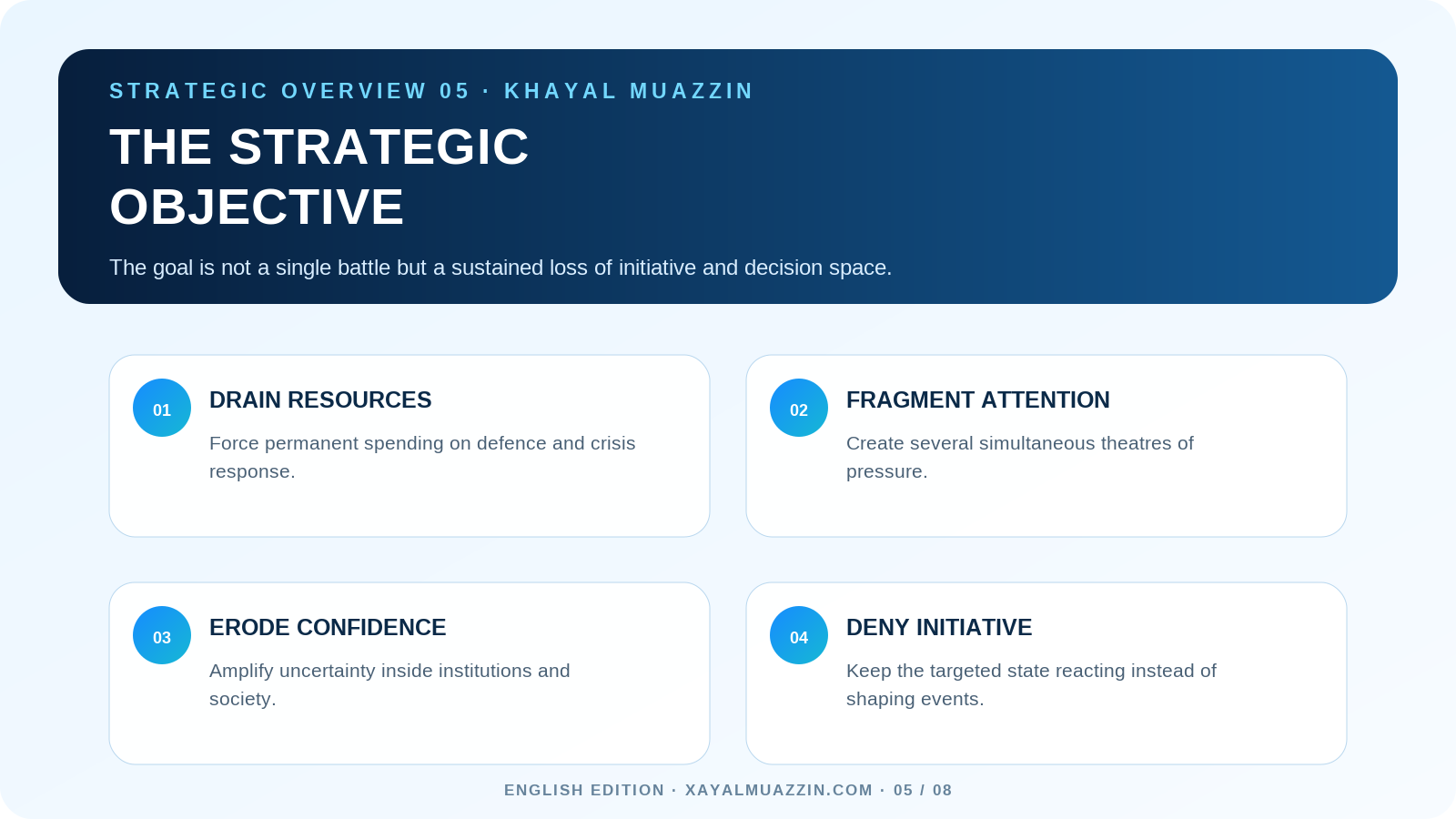
The main task of such a model is to force the state to constantly react, waste resources, divert the attention of society, deplete the economy and at the same time create a feeling of endless instability. With regard to Iran, this logic is especially dangerous, because the country occupies a key position between the Persian Gulf, the Caucasus, Central Asia, Russia, China and the Middle East.
Lessons from Yugoslavia, Ukraine and the Islamic World
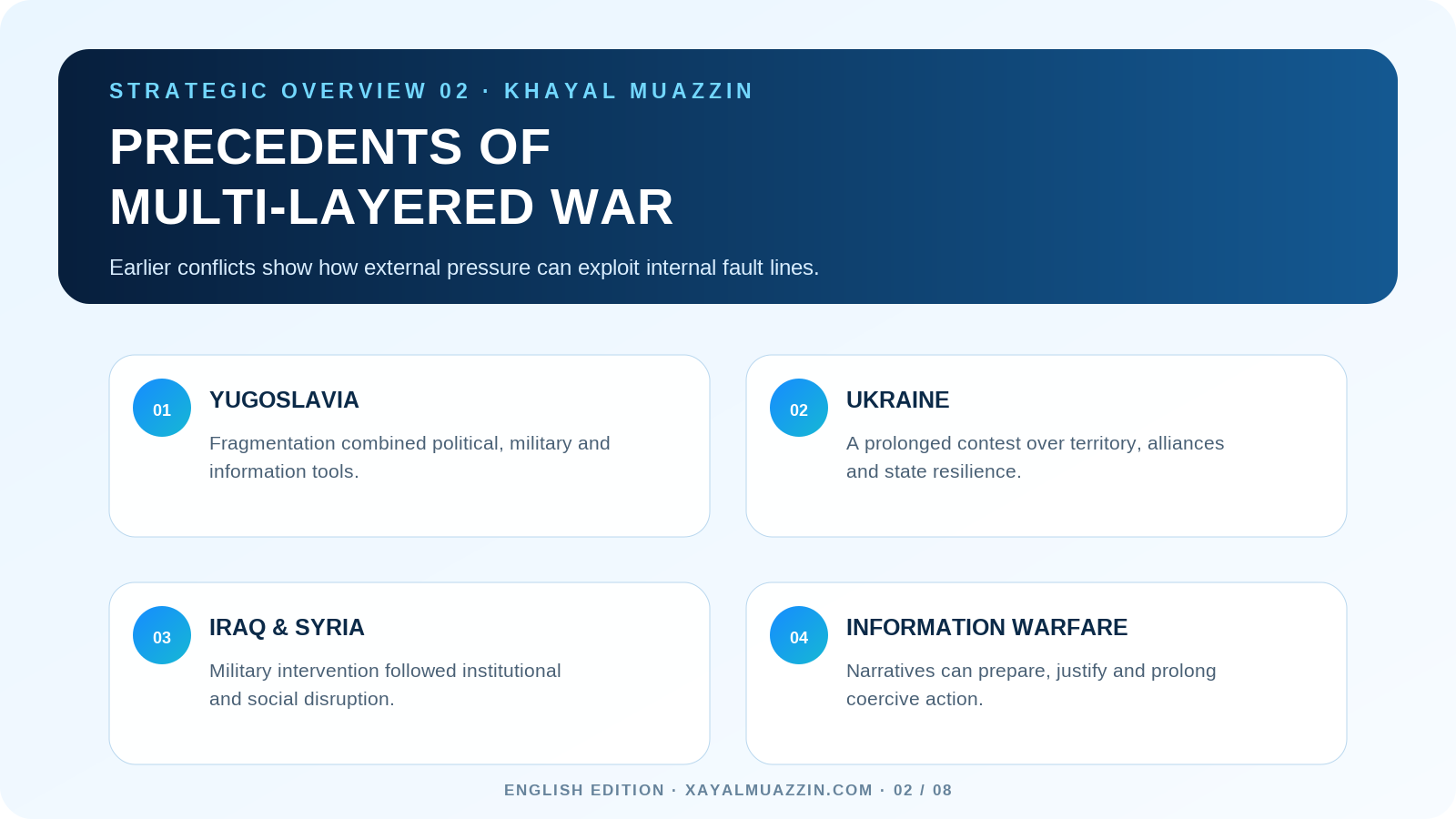
A similar model has already been used in other regions. In Yugoslavia, ethnic and religious contradictions were turned into a large-scale crisis, which led to human losses, population displacement and the collapse of the state. In Ukraine, one Slavic people was drawn into a war against another, and the main human and material losses fell on the peoples themselves.
In the Islamic world, a similar strategy is manifested through endless ethnic, religious, border conflicts and security crises. Such conflicts do not always lead to the immediate collapse of the state, but they gradually weaken the largest countries in the region, make them dependent on external decisions and reduce their ability to independent strategic policy.
The main mistake is to incorrectly identify the source of the threat
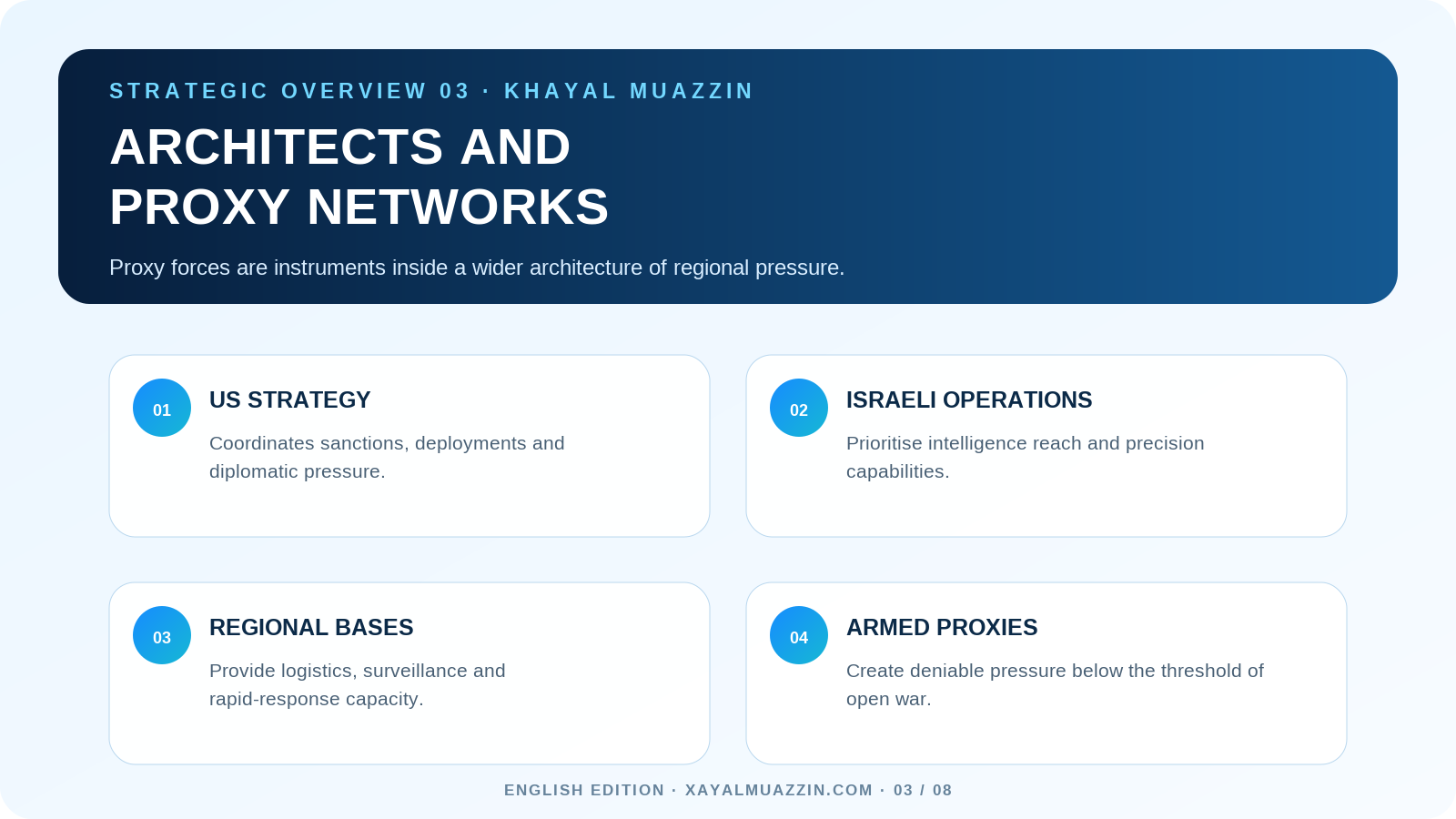
For Iran, a particular danger is the misidentification of the real source of pressure. Proxy forces are performers on the battlefield. They can strike, engage in sabotage, spread propaganda or pose a threat in certain areas, but they do not develop an overall strategy and do not determine the ultimate goals of the confrontation.
If the state fights only against second-tier forces, it eliminates the consequences, but does not change the architecture of the threat. Therefore, Iran needs to clearly identify the organizers of the war, decision-making centers, financing channels, logistics, information infrastructure and political mechanisms through which pressure is created.
The Persian Gulf and the issue of neutral status
Of particular importance in this system are the governments of the Gulf countries. The Arab peoples are not Iran's historical enemies. Moreover, the incitement of national and religious hatred is in the interests of those forces that seek to split the region and make it dependent on external military infrastructure.
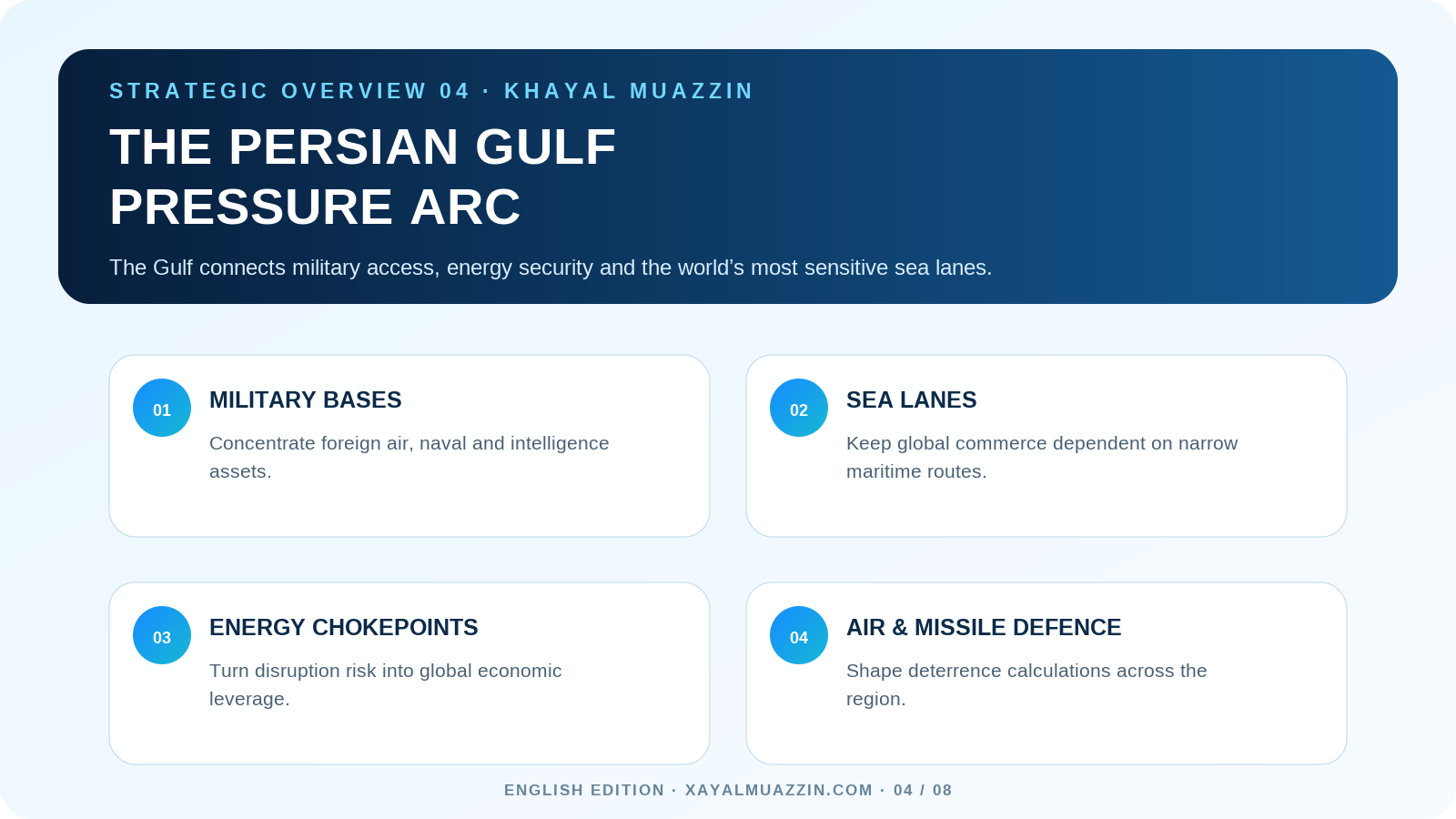
However, governments that provide foreign forces with territory, airspace, ports, military bases, intelligence capabilities, and logistical support for operations against Iran cannot expect to remain fully neutral. In the new war model, territory, base, port, radar system, and intelligence channel become part of the overall pressure architecture.
How to deprive an opponent of initiative
Iran should not be allowed to independently determine the time, place and scale of the next confrontation. If the initiative is completely at the external centers of pressure, each new crisis will begin at a time convenient not to Tehran, but to those forces that seek to deplete the country.
A comprehensive approach is needed to deprive the enemy of the initiative: strengthening military power, developing regional diplomacy, forming stable alliances, using political and legal instruments, conducting intelligence operations, protecting critical infrastructure and increasing the cost of a hostile American presence in the Persian Gulf.
Deterring wider missiles and drones
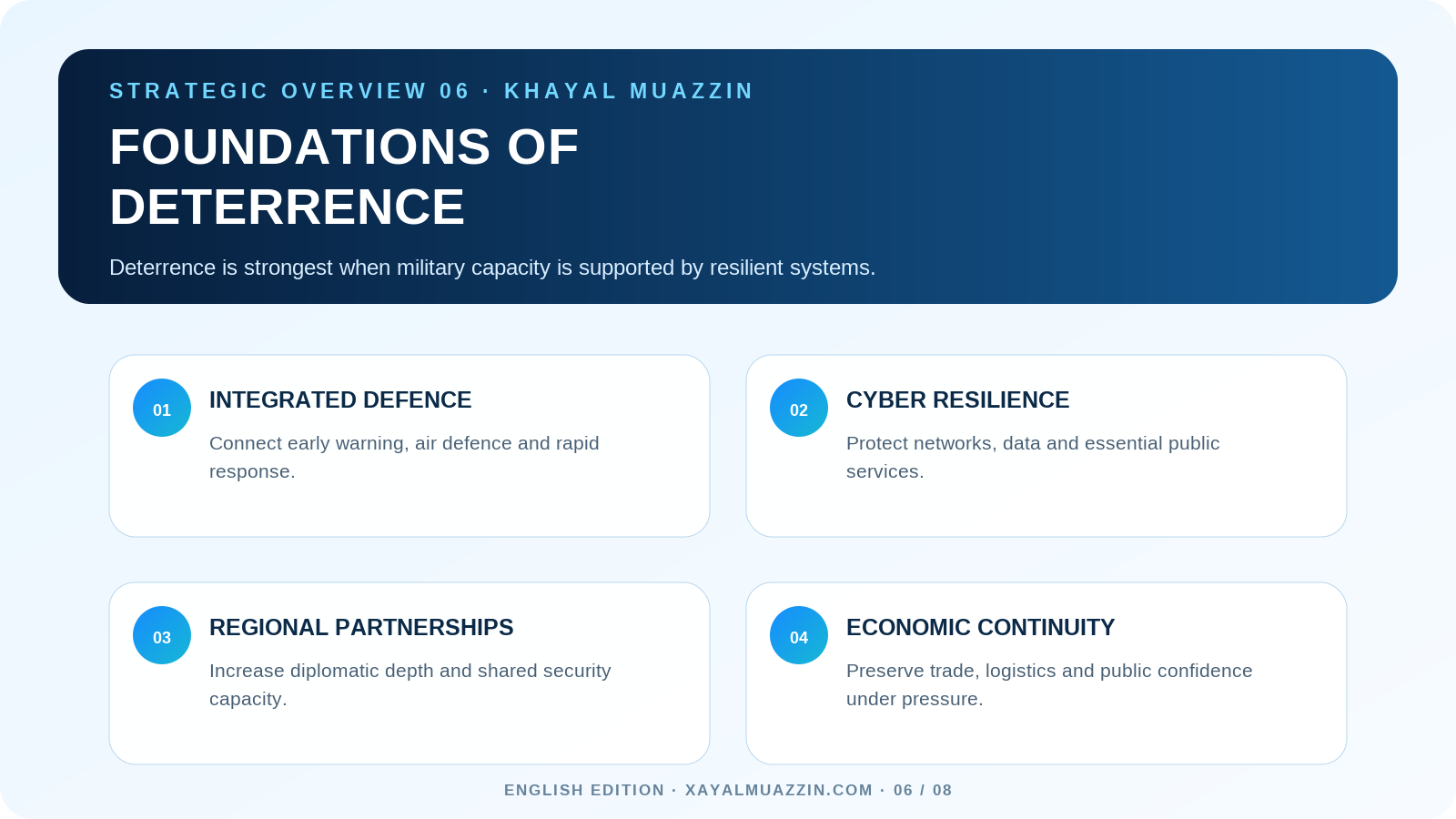
Deterrence cannot be based on missiles and drones alone. Military power is important, but it is only one element of the overall stability of the state. Real deterrence includes economic resilience, political cohesion, national will, information and cybersecurity, public trust, institutional performance, and reducing internal contradictions.
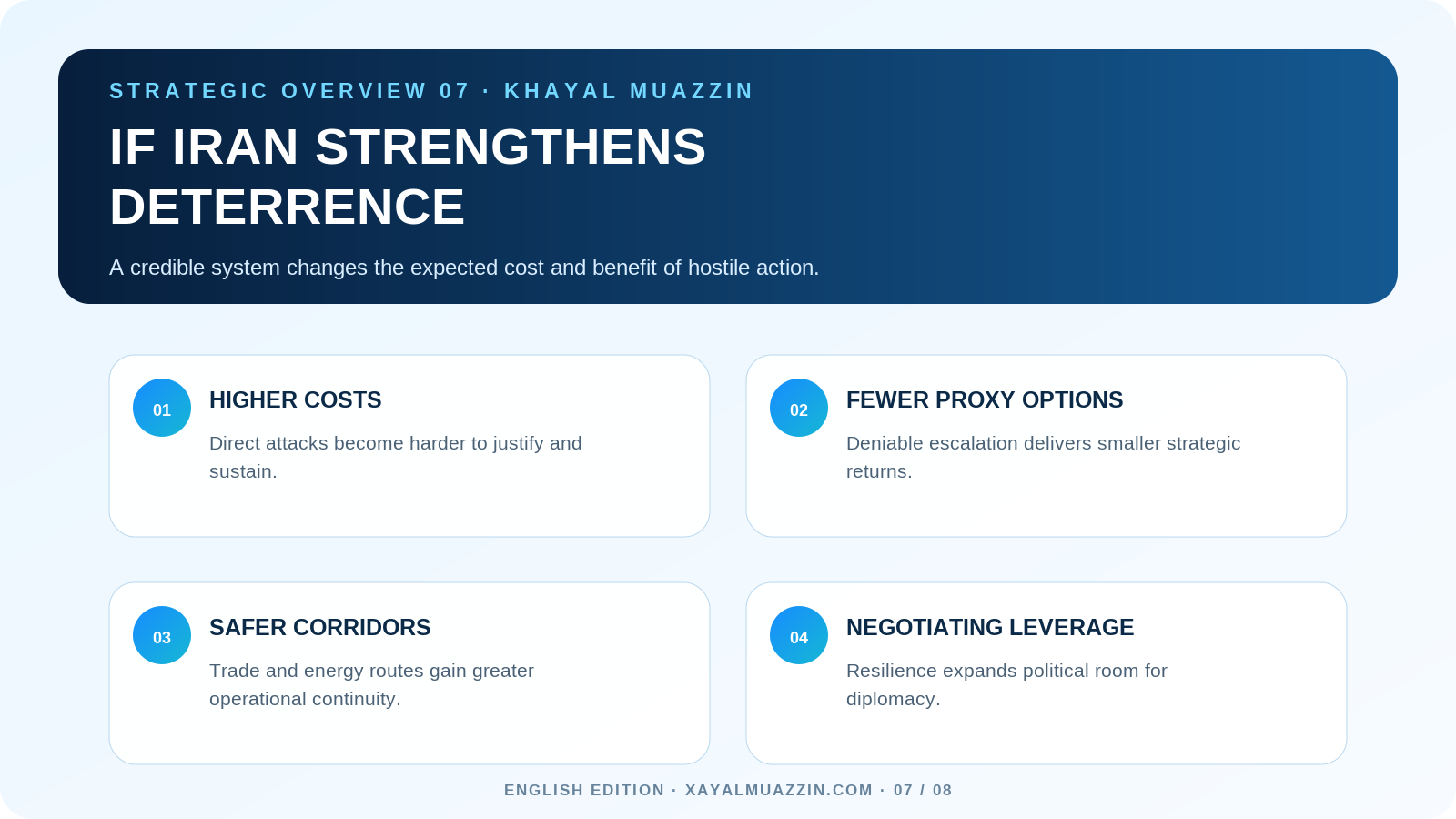
Any attack on Iran must have a proportionate and obvious price for the organizers, making the repetition of such actions risky. This does not mean striving for a big war. On the contrary, strong deterrence reduces the likelihood of war, because it changes the calculations of those who are used to acting through pressure, threats and foreign territories.
National unity as a condition for survival
Protecting Iran cannot be the task of an individual party, political faction, social group or ideological direction. We are talking about the protection of the historical state-nation and many thousands of years of civilization. Every citizen who stands for the territorial integrity and national independence of the country is part of the common front for the protection of Iran.
The Iranian people do not seek religious or ethnic war. However, a world without strength and the ability to deter becomes only an opportunity to regroup the enemy. If Iran manages to strengthen its deterrence system, the calculations of regional players will change, dependent states will reconsider their behavior, and national security and state stability will increase.
Two scenarios for Iran
If the enemy manages to complete the creation of the encirclement ring, Iran may find itself in an endless cycle of crises. In such a scenario, a new grouping, a new country, a new military base, a new information occasion or a new economic lever will be used against the country every time. This will keep Iran in reaction mode at all times.
Another scenario is possible only if there is strength, internal unity and strategic independence. In this case, Iran not only responds to threats, but changes the very cost of pressure. Indecision, inaction and scattered responses can be no less dangerous than a direct military attack.
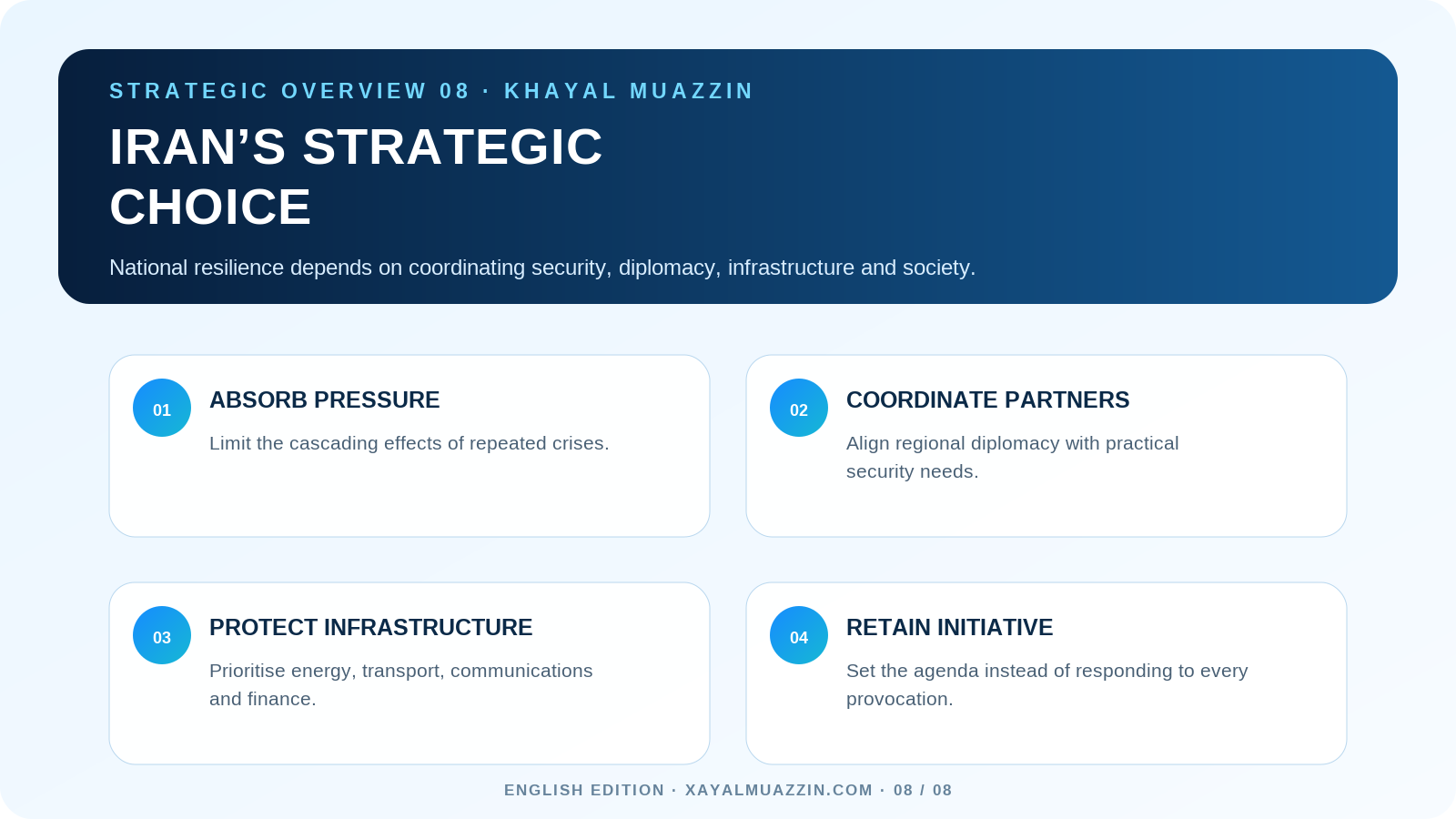
Major conclusion: Iran needs strength, internal unity and strategic independence — not for the sake of an imposed war, but for the sake of sustainable peace and preservation of national independence. In the 21st century, the struggle against states is increasingly being waged not only at the front, but also through bases, sanctions, information operations, cyberattacks, proxy forces and internal fault lines.
The new model of war against Iran shows that the main field of confrontation is not only the territory, but also the ability of the state to maintain the will, institutions, economy, security, information control and public trust. It is these factors that will determine whether Iran can remain an independent force in the changing regional and Eurasian balance.