The visit of U.S. Secretary of State Marco Rubio to Central Asia should be viewed not only through the prism of Washington’s bilateral relations with the states of the region. In my view, the main objective of American policy in this direction is linked to three countries — Iran, Russia and China.
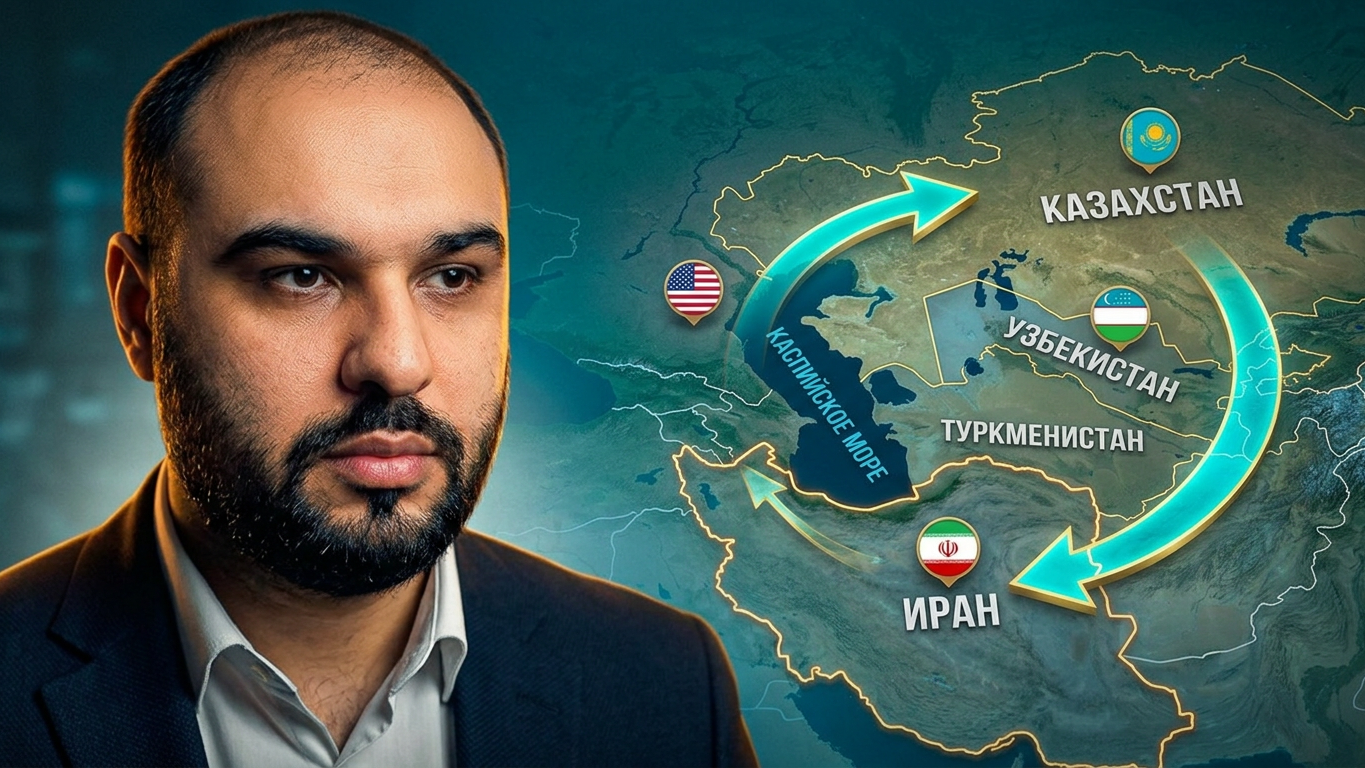
The United States has previously shown interest in Central Asia, but that interest was largely determined by broader geopolitical objectives. At one point, Washington viewed the region above all as a strategic foothold for operations in Afghanistan.
Today the situation has changed. Central Asia is gaining increasing importance in the American strategy of containing China, limiting Russian influence and intensifying economic pressure on Iran.
I would like to draw particular attention precisely to the Iranian direction.
One of Washington’s key tasks is to further tighten Iran’s economic and transport isolation. This concerns not only maritime communications, but also overland transit routes that connect Iran with China and the states of Central Asia.
Regional media have reported that the United States exerted pressure on Central Asian states, demanding restrictions on trade, rail, transit and air links with Iran.
In particular, there were reports of threats to impose sanctions and even to restrict access to the dollar-based financial system if American demands were not met.
Rail links between China and Iran via Kazakhstan and Turkmenistan deserve particular attention.
Earlier, reports appeared about a possible cessation of rail freight transportation along this route. The Iranian side denied those reports. Nevertheless, the very fact that the question was raised indicates the strategic significance of Central Asian transport corridors.
It is necessary to understand that rail routes cannot fully replace maritime transport.
For comparison, one large cargo ship can carry about 100,000 tonnes of goods. A train of 50 wagons can transport approximately 3,000 tonnes. Accordingly, more than 30 such trains would be needed to carry a comparable volume.
However, overland routes have another advantage — delivery speed and the ability to maintain economic ties when maritime shipping is restricted.
This is precisely why the importance of these transport corridors goes far beyond ordinary commercial calculations.
Under external pressure, the availability of alternative routes allows Tehran to preserve room for economic manoeuvre and to demonstrate that a policy of complete transport isolation is not achieving its intended goals.
But there is another side to this.
If Kazakhstan, Turkmenistan and other states in the region agree to limit transit cooperation with Iran, it will not be Tehran alone that incurs economic losses.
The Central Asian states themselves may also lose part of their transit revenues, investment opportunities and access to important international transport routes.
In my view, Marco Rubio’s trip should be considered precisely in this context.
At the same time, it would be mistaken to assume that all countries in the region are ready to follow such a policy unconditionally.
Kazakhstan, Uzbekistan and Turkmenistan have their own foreign-policy and economic interests. Their relations with China, Russia and Iran have been formed over decades and cannot be completely revised solely under external pressure.
Moreover, for the states of Central Asia, maintaining a balance among the largest international centres of power is one of the principal instruments for ensuring their own strategic autonomy.
Thus, the main question is not so much the Rubio visit itself, but how far the United States is prepared to go in attempting to reshape the geopolitical and transport-economic architecture of Central Asia.
I believe that, with regard to Iran, Washington seeks gradually to narrow the space for alternative transport links by intensifying economic pressure through neighbouring states.